

В мире тяжелой техники и промышленной автоматизации гидравлические шланги — это незаметные герои. Они являются жизненно важными элементами экскаваторов, шасси самолетов и морских нефтяных платформ. Но если вам когда-нибудь доводилось видеть, как на строительной площадке выходит из строя шланг высокого давления, вы знаете, что не все шланги одинаковы.В этой статье вы узнаете, как производятся гидравлические шланги.
Как главный инженер с 30-летним стажем работы в сфере химии каучука и стальной арматуры, я был свидетелем эволюции отрасли — от простых тканевых оплеток до спиральных «монстров», рассчитанных на сверхвысокое давление. Если вы хотите понять, как изготавливаются эти важнейшие компоненты, или если вы являетесь производителем и стремитесь оптимизировать свою производственную линию, то вы попали в нужное место.
В этом подробном обзоре мы разберем процесс производства гидравлических шлангов, раскроем секреты составления резиновых смесей и объясним, почему импульсные испытания являются безусловным «золотым стандартом» качества.
- Строение высокоэффективного гидравлического шланга
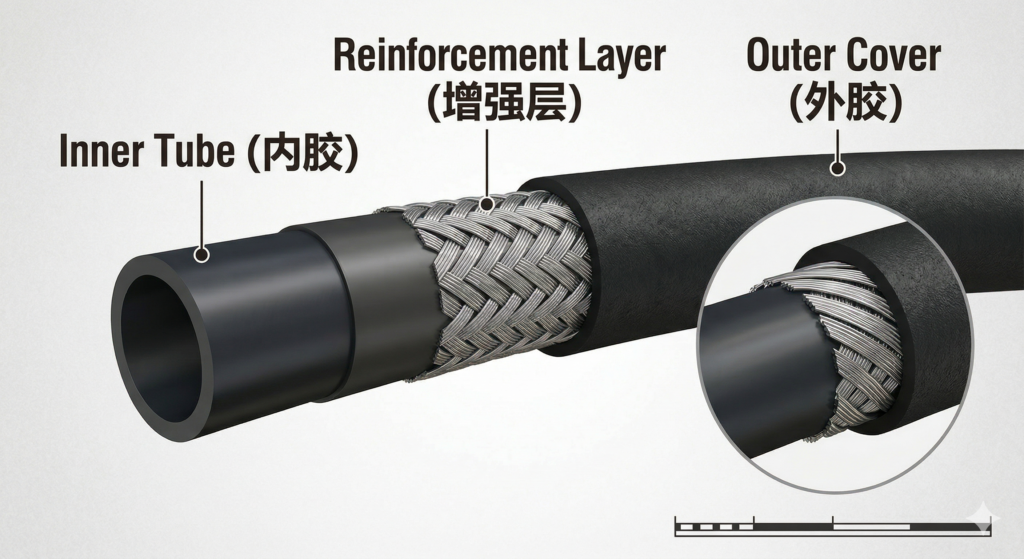
Прежде чем говорить о машинах и нагреве, нужно поговорить о конструкции. Гидравлический шланг — это не просто резиновая трубка, а высокотехнологичная многослойная конструкция.
«The Inner Tube»: «The Chemical Guardian»
Внутренняя трубка — это единственная часть шланга, которая непосредственно соприкасается с гидравлической жидкостью. Независимо от того, используете ли вы масла на нефтяной основе, водно-гликолевые смеси или биоразлагаемые жидкости, этот слой должен быть химически инертным.
Наиболее распространенный материал: нитрил (NBR). Это лидер по маслостойкости.
Технический секрет: мы регулируем содержание “акрилонитрила”. Более высокое содержание обеспечивает лучшую маслостойкость, но при этом шланг в холодную погоду становится жестким, как доска. Это тонкий баланс.
Укрепление: мышцы
Именно это не дает шлангу раздуться, как воздушный шарик.
Шланги в оплетке: отлично подходят для обеспечения гибкости и работы при среднем давлении (например, SAE 100R1 или R2).
Спиральные шланги: это настоящие “тяжеловесы”. Стальная проволока намотана параллельными слоями. Такая конструкция позволяет выдерживать экстремальные «скачки давления», характерные для современной строительной техники.
Внешняя оболочка: броня
Покрытие защищает от воздействия внешней среды — ультрафиолетовых лучей, озона, солевого тумана и абразивных пород. Материалы: покрытия из хлоропрена (CR) или Tough Cover (UHMWPE), обеспечивающие исключительную стойкость к истиранию.
- Искусство составления резиновых смесей (секретный рецепт)
За 30 лет работы я понял, что именно в смесительной комнате решается судьба шланга. Приготовление резиновой смеси больше похоже на выпечку пирога, чем на строительство моста.
Мастербатч
Мы начинаем с исходных полимеров, но затем добавляем “изюминку”:
Технический углерод: он придает шлангу черный цвет и, что еще важнее, обеспечивает его прочность и защиту от ультрафиолетового излучения.
Ускорители и сера: это те самые “дрожжи”, которые впоследствии вызовут отверждение (вулканизацию) резины.
Пластификаторы: они обеспечивают гибкость шланга при температуре -40°F.
Процесс смешивания
С помощью смесителя Банбери мы смешиваем эти материалы под воздействием высокого давления и температуры.
Совет главного инженера: следите за вязкостью смеси Mooney. Если резина слишком густая, она не будет равномерно выдавливаться. Если она слишком жидкая, стальная арматура провалится сквозь неё прямо во время производства.
- Точная экструзия: изготовление сердечника
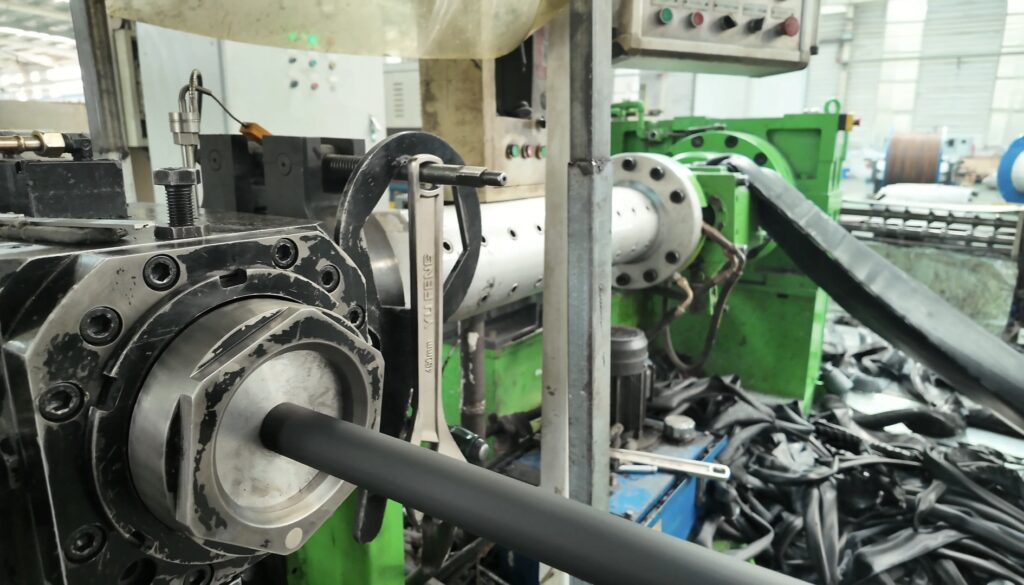
Теперь, когда у нас есть резина, пришло время придать ей нужную форму. Для этого мы используем экструдер — по сути, гигантский нагреваемый шнек, который продавливает резину через матрицу.
С оправкой или без оправки
Изготовление на оправке: Мы наносим резину методом экструзии на твердый пластиковый или стальной “стержень” (оправку). Это гарантирует идеальный внутренний диаметр (I.D.). Если вам нужен шланг, соответствующий жестким допускам для фитингов высокого давления, оправки — это именно то, что вам нужно.
Производство труб большой длины: в данном случае мы используем давление воздуха для поддержания трубы в раскрытом состоянии. Этот метод позволяет работать быстрее и изготавливать катушки длиной 500 футов, однако при этом сложнее обеспечить необходимую точность.
- «Укрепление»: «Высокоскоростной балет»
Это самая захватывающая часть завода. Если вы изготавливаете гидравлический шланг с проволочной оплеткой, то используете оплеточный станок. Если же речь идет о шланге высокого давления, то применяется спиральный намоточный станок.
«Нейтральный угол»: волшебное число
Каждый инженер знает эту цифру: 54° 44′.
Это так называемый “нейтральный угол”. Если стальная проволока закреплена именно под этим углом, шланг не удлиняется и не укорачивается при создании давления. Если угол наклона ваших машин отличается даже на 1 градус, шланг будет “изгибаться” под давлением, что приведет к преждевременному износу соединений.
Регулировка натяжения
На рынке качество определяется стабильностью. Мы используем электронные натяжители, чтобы гарантировать, что каждая отдельная нить стальной проволоки натягивается с абсолютно одинаковым усилием. “Ослабленная” нить — это слабое место, которое разорвется при импульсном скачке напряжения. Для обеспечения безопасности и работоспособности современные производители строго соблюдают Стандарты SAE J517 на гидравлические шланги.”
- Вулканизация: обеспечение прочности
На данном этапе шланг ещё “зелёный” — резина мягкая и липкая. Нам нужно вызвать химическую реакцию, называемую вулканизацией.
Большинство шлангов высокого класса — это обмотанная нейлоновой лентой прежде чем попасть в гигантскую паровую скороварку, называемую автоклав.
- Под воздействием высокой температуры атомы серы образуют “мостики” между молекулами каучука.
- Давление, создаваемое нейлоновой обмоткой, заставляет резину впитываться в щели стальной проволоки.
И что в итоге? Монолитная конструкция, в которой резина и сталь представляют собой единое целое. Именно поэтому с высококачественного шланга не так-то просто снять оболочку.
- Испытание пределов: почему импульсные испытания имеют важное значение
В нашей отрасли ответственность и простои обходятся дорого. Именно поэтому мы не просто “проверяем” давление, а пытаемся вывести шланг из строя в лабораторных условиях.
Статическое давление и импульсное давление
Любой шланг способен выдерживать постоянное давление в течение минуты. Однако в реальных условиях гидравлический цилиндр резко открывается и закрывается, создавая “удары”.”
Импульсное испытание: мы нагреваем масло до 212 °F (100 °C) и дважды в секунду повышаем давление до значения, равного 133% от предельного рабочего давления, в течение 1 миллиона циклов.
Если шланг выдерживает испытание, он получает сертификат “Total Performance”.
- Как оптимизировать производство (с точки зрения бизнеса)
Если вы управляете производственным предприятием, вас наверняка беспокоит вопрос контроля затрат. Вот как мы решаем эту задачу, не идя на компромиссы:
Сокращение отходов с помощью лазерных микрометров: установите лазерные датчики сразу за экструдером. Если толщина стенок отклоняется на 0,1 мм, оборудование автоматически корректирует настройки. Это позволяет ежегодно экономить мили резины, которая иначе пошла бы в отходы.
Оптимизация цикла вулканизации: с помощью “реометра” можно определить точный момент, когда резина достигает идеальной степени вулканизации. Если извлечь шланг из автоклава на 5 минут раньше, суточная производительность может увеличиться на 10%.
Альтернативные материалы для оболочки: для шлангов, не подвергающихся воздействию солнечного света, переход с дорогостоящего CR на высококачественную смесь SBR позволяет сэкономить 15% на затратах на материалы без ущерба для номинального давления.
- Заключение: Будущее гидравлики
Отрасль движется в направлении создания “умных шлангов” со встроенными датчиками, которые предупреждают о приближающемся выходе из строя. Но пока это не станет мировым стандартом, основные принципы остаются прежними: точная химия, идеальные углы и жесткие испытания.
Производство гидравлических шлангов — это дело, в которое вкладывается душа. Это сочетание запахов резины старой школы и цифровой точности новой школы. Независимо от того, покупаете ли вы шланги для своего автопарка или производите их для всего мира, помните: качество заключается в слоях.
Независимо от того, нужно ли вам закупить стандартные шланги в больших объемах или требуется индивидуальное техническое решение для экстремальных условий эксплуатации, мы всегда готовы вам помочь.https://zhongxianghose.com/collections/hydraulic-hose/Как с нами связаться https://zhongxianghose.com/contact-us/
Технические материалы компании ExxonMobil, посвященные высокоэффективному синтетическому каучуку.Технические материалы по химической продукции компании «http://ExxonMobil»
Технические документы по Krynac® NBR и оптимизации содержания акрилонитрила (ACN).http://ARLANXEO Техническая документация по Krynac® NBR
Технические ресурсы компании DuPont по передовым эластомерам и армирующим волокнам.Техническая библиотека по высокоэффективным материалам компании http://DuPont